
The id.DRIVE consortium has taken another important step in the expansion of its international study network with the successful completion of site initiation visits at three participating centres in Canada in July.
The on-site visits were conducted at the Mt Sinai Hospital in Toronto, coordinator of the Toronto Invasive Bacterial Diseases Network (TIBDN), and the Ottawa Hospital, both in Ontario; as well as at the Calgary Corridor Hospitals in Alberta. Formal site initiation visits were completed in Toronto and Ottawa, while a pre-site initiation visit was held in Calgary with part of the study team.
The visits aimed to review study procedures and ensure that all operational requirements for the surveillance and RSV vaccine effectiveness studies are in place for the upcoming 2026–2027 id.DRIVE season. Overall, the visits were highly successful, with no major findings that would prevent the sites from becoming active once ethics approvals and contracting processes are completed.
The Canadian teams demonstrated strong expertise in conducting multicentre research and surveillance studies, providing confidence in their ability to rapidly initiate study activities on the 1st of September 2026. Across all visits, investigators and study staff showed a high level of engagement and commitment to contributing to id.DRIVE’s mission of generating robust real-world evidence on vaccine effectiveness and the burden of respiratory infections.
Site initiation visit at The Ottawa Hospital General campus
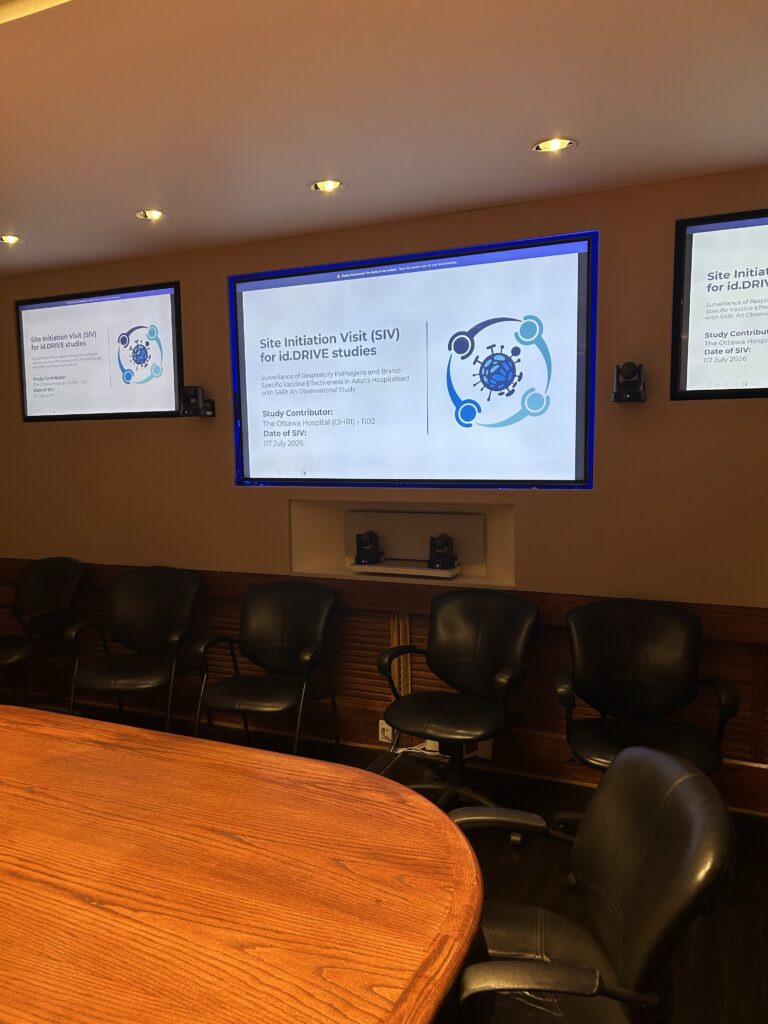

Site initiation visit at Mt Sinai Hospital in Toronto
Particularly notable was the visit to TIBDN in Toronto, where a large multidisciplinary team of approximately 15 study staff members participated in the discussions. The team expressed great enthusiasm for joining the study and actively engaged in detailed conversations about study implementation. Their insightful questions and constructive feedback on id.DRIVE’s new electronic data capture system (Viedoc™) will help support the optimisation of study data upload across the network.


The addition of Canadian sites further strengthens id.DRIVE’s geographic reach and enhances its ability to generate high-quality evidence across diverse healthcare settings. As id.DRIVE continues to expand its network of participating centres, these collaborations will play a key role in supporting the generation of timely and reliable evidence to inform public health decision-making and vaccination strategies worldwide.