
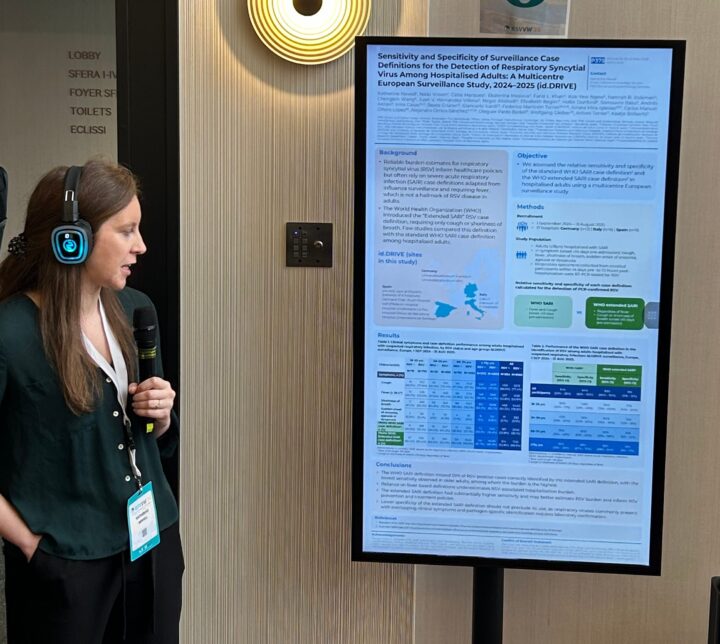
From 17–20 February 2026, the ReSViNET – Respiratory Syncytial Virus (RSV) Foundation held its 9thinternational conference in Rome, bringing together global experts dedicated to advancing research on RSV. The id.DRIVE consortium actively engaged in this major scientific event, reinforcing its commitment to high-quality RSV surveillance and vaccine effectiveness research.
Advancing RSV knowledge through multi-stakeholder collaboration
The conference provided an opportunity to exchange knowledge on the latest developments in RSV vaccines and preventive strategies, including monoclonal antibodies. This event is an important forum to meet with leading researchers, clinicians, industry representatives, academic experts, decision-makers, and stakeholders from regulatory, and global health organisations worldwide.
Representatives from id.DRIVE partners such as P95, FISABIO, Pfizer, and Sanofi attended the conference, connecting in person to discuss emerging scientific insights and explore how recent RSV developments can be integrated into ongoing and future id.DRIVE studies.
The team met with investigators from across the globe, exploring potential future international research network extension. The id.DRIVE team also connected with Harish Nair, member of the id.DRIVE Independent Scientific Committee, who participated in several conference sessions.
Presenting id.DRIVE research
Two e-posters were presented during the conference, highlighting recent findings from the id.DRIVE multicentre European surveillance platform:
- “Sensitivity and Specificity of Surveillance Case Definitions for the Detection of Respiratory Syncytial Virus among Hospitalised Adults: A Multicentre European Surveillance Study, 2024–2025 (id.DRIVE)”
Presented by P95 Senior Epidemiologist Katherine Newell, this study assessed the sensitivity and specificity of the standard WHO SARI case definition and the WHO extended SARI case definition in hospitalised adults, using data generated by the id.DRIVE surveillance study. - “Prevalence and Clinical Characteristics of Respiratory Syncytial Virus in Hospitalized Adults: Results from a Multicentre European Study, 2024–2025 (id.DRIVE)”
This analysis characterised the demographics, clinical presentation, and outcomes of adults hospitalised with RSV across participating European sites.
Strengthening the future of RSV research
Participation in the ReSViNET 2026 conference provided an important opportunity for id.DRIVE to showcase its scientific contributions, remain aligned with global RSV research priorities, and further strengthen collaboration with different stakeholders.
As RSV prevention strategies continue to evolve, id.DRIVE remains committed to generating robust, regulatory-grade evidence to support public health decision-making and optimise protection for adults at risk across Europe and beyond.
In April 2026, id.DRIVE will also participate to the ESCMID Conference in Germany where team members will have an opportunity to present the latest study results.